It is not an “uncensored” model you adopt to be more productive. It is a derivative that turns off a language model’s refusal. What abliteration is, why it circulates on public hubs, and how an enterprise governs the provenance of its weights.
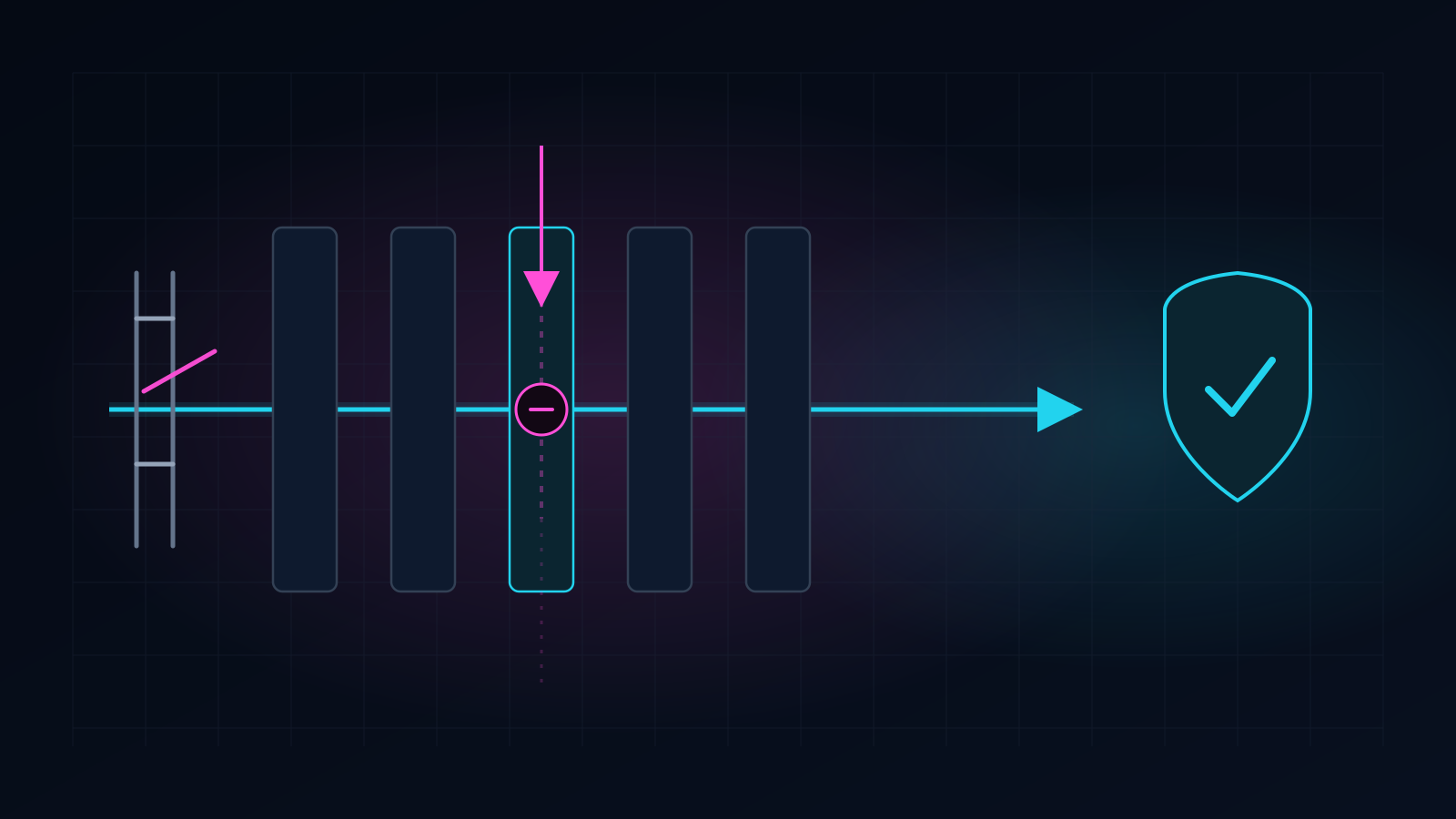
Abliteration modifies a model’s weights to suppress the internal direction that mediates refusal of certain requests, as described by Arditi and colleagues (2024). In an enterprise it is not a productivity shortcut: it alters safeguards, may violate the base model’s license, and requires controlling the provenance of every weight file that enters the environment.
What abliteration is
In 2024, Arditi and colleagues published Refusal in Language Models Is Mediated by a Single Direction, a paper presented at NeurIPS. The finding, in enterprise terms, is this: in several open-weight chat models, refusal of requests treated as harmful can be described as a direction in the model’s internal representations. If that direction is removed, the model stops refusing those requests. If it is added, the model may refuse even harmless ones.
Abliteration is the name that caught on for that intervention when it is applied to the weights and a derived checkpoint is published: the file is no longer the one from the original lab, even if it still carries the family name. You do not need to know the procedure to understand the risk. The governance point is that someone altered a safety behavior in a persistent way and redistributed the result.
The paper also underlines something uncomfortable for anyone buying “aligned models”: if a refusal safeguard rests on a direction that localized, it is more fragile than a chat demo suggests. That informs an evaluation; it does not authorize turning the safeguard off.
This article does not describe how to produce a derivative or how to bypass safeguards. The aim is for a committee to know what it is looking at when a weight file appears with that label, and what it has to require before the file enters a corporate environment. The broader context is open-weight models: precisely because the parameters can be downloaded, they can also be modified and republished.
Why they show up on public hubs
Community repositories — Hugging Face is the most visible — host thousands of third-party derivatives. Among them are checkpoints advertised as abliterated. They usually start from an open-weight model, carry the family name plus a personal account, and circulate with incomplete model cards, unofficial hashes and, at times, a license that does not match the base model’s.
That a file is published and can be downloaded is not an approval. It is a symptom that the weight supply chain looks like that of any binary someone uploaded to a public index. Without an internal catalog, the shortest path into a working environment is that a team downloads it “because it answers more” and leaves it connected to documents or tools.
Presence on a hub also says nothing about who changed what, with which test data, or whether the file is exactly what it claims to be. For an enterprise, that is already a provenance problem, even if the intended use looks harmless.
What risks it introduces in an enterprise
Security and model behavior. The change is designed to weaken refusal of requests the base model had been tuned to reject. In an internal assistant or a product, that widens the range of unwanted outputs. The other control layers — filters, permissions, human oversight — do not become optional; they become the only brake, and they have to be designed with the knowledge that the model will cooperate less at that point.
License and compliance. The derivative inherits the base model’s conditions; it does not erase them. In the Llama 4 acceptable use policy, Meta expressly prohibits circumventing or removing use restrictions or other safety measures, or restoring functionality it disabled. Publishing, downloading, or using an abliterated derivative of that family is not a technical shortcut: it can be a breach of the license contract. Under Apache 2.0 or another permissive license, modifying weights may be allowed; that does not legalize a use that violates the law, an internal policy, or an additional usage policy, and it does not remove responsibility for the outcome.
Supply chain. An unofficial checkpoint is an artifact not signed by the original provider. It may be incomplete, mislabeled, or tampered with. Putting it into production — or onto a shared notebook with access to internal data — without verifying origin, integrity, and license is the equivalent of installing a binary from a forum and connecting it to the corporate network.
Accountability. If a system running an altered model produces an unlawful, discriminatory, or operationally damaging output, the conversation is no longer a lab discussion. Legal, risk, and the system owner have to be able to explain which model it was, where it came from, and who approved it. “It was on a hub” is not an answer.
The informal path into production. The most common risk is not an approved project. It is the model that enters through a personal trial and ends up answering questions about real folders. AI governance exists, among other reasons, so that path is not the default.
On quality: the authors reported, in their evaluations, a limited effect on other capabilities when refusal was disabled. That does not translate into “it is better for your operation.” Any derivative needs its own evaluation, and the bar for production is a different one.
Legitimate uses — and the perimeter they require
There are uses an enterprise can defend, under strict conditions:
- A red-team or safeguard-evaluation exercise, in an isolated environment, to understand how fragile a candidate model’s refusal is before you buy or install it.
- Interpretability or robustness research, with an owner, a written scope, and no path to users or to production data.
- Informing a governance decision: if a chat model’s safety depends on a mechanism that localized, the committee knows it has to require additional layers and not trust the demo.
In all of those cases the environment is isolated, there is no connection to internal systems or to tools that can take action, and the exception is approved by security and legal. The output of the exercise is a report, not a candidate model for production.
It is not a legitimate use to “make the assistant stop refusing” for employees or customers, or to gain productivity by circumventing a usage policy. If a business case collides with a model’s safeguards, the path is a different one: change models, change the design, or decline the case.
How to govern the provenance of the weights
The control looks like the control of any software dependency, with one nuance: the artifact is a model, and its behavior is not tested with a vulnerability scanner alone.
- Approved catalog. Only listed models, with version, origin, license, hash, and owner, are served in shared or production environments. What is not in the catalog does not run.
- Verifiable origin. Official lab repositories, or an internal registry the enterprise builds, come first. A community account is not an origin until security treats it as one and documents why.
- Integrity. A known hash, a review of the model card, and of the license that actually applies — including the base model’s, if it is a derivative.
- Inventory. Every model or agent in use has an identity, an owner, a scope, and a risk level, the same approach used to govern AI systems and data and AI programmes.
- Research perimeter. If a red-team lab is authorized, it lives apart: no production data, no action-taking tools, named access, and a close date.
- Monitoring. Download and registration controls in the environment keep an unapproved checkpoint from being installed “just to try it.”
| Role | Decides |
|---|---|
| CISO or AI security | The default rule, lab exceptions, and the perimeter |
| Legal and compliance | License, acceptable use policy, and the legal exposure of the case |
| AI governance / model risk | Whether an exception is defensible and what evidence must be kept |
| Architecture or platform | The technical catalog, allowed origins, and registration control |
| System owner | That no unlisted model is left connected to their data or tools |
Applicability in the enterprise: when to, and when not to
It makes sense to look at the topic, inside a closed perimeter, when security wants to test the robustness of a candidate model before approving it; when there are signs that teams are downloading unofficial derivatives; when the model catalog is being built or reviewed and a written rule is needed for community-sourced weights; or when legal asks for evidence that the enterprise controls what enters the environment.
It does not make sense — and should not reach a business pilot — when the goal is a “less restricted” assistant for employees or customers; when the model would be connected to internal documents, databases, or tools; when no one can explain the file’s origin and license; or when the derivative conflicts with the base model’s acceptable use policy. In those scenarios the answer is no, not “we’ll look at it in a sprint.”
Who decides. Security sets the default rule, with legal. A system owner does not, on their own, authorize a checkpoint downloaded from a hub. A research exception is signed by the CISO and legal, with a scope and a date. The AI governance committee, when one exists, records the decision. Engineering executes the perimeter; it does not define it alone.
Frequently asked questions
What is an abliterated model?
It is a derivative whose weights were modified to suppress the internal direction through which the model refuses certain requests. The mechanism was described by Arditi and colleagues in 2024. It is not a different model trained from scratch: it is the base model with an intervention on its parameters.
Is it legal to use an abliterated model in the enterprise?
It depends on the license and the acceptable use policy of the base model, and on the law that applies to the case. In Llama 4, the acceptable use policy prohibits circumventing or removing safety measures. Even when a license allows weight modification, that does not authorize production use or remove responsibility for the outcome.
When is abliteration used legitimately?
In research and in isolated red-team exercises: to understand how fragile a candidate model’s refusal is, and to inform a purchasing or governance decision. It is not a shortcut for an internal assistant or a product that “answers everything.”
How do you keep unapproved weights from entering the environment?
With an internal catalog of approved models, origin and hash verification, an inventory with an owner, and controls so that checkpoints from public hubs are not downloaded into shared or production environments without review. A lab exception is approved by security and legal, inside an isolated perimeter.
Is an abliterated model more capable than the original?
Do not assume that it is. The authors reported that the intervention disables refusal with a limited effect on other capabilities in their evaluations. That is not a certification for your task, and it is not an argument for taking the derivative to production.
Next step
If models are already in use, or there is any suspicion that unofficial checkpoints are circulating, the next step is a provenance audit: which weights are present, where they came from, under what license, with what hash, and whether any is an unapproved derivative. On that basis we can run a security and governance review: catalog, roles, a lab perimeter, and the rule for entry into production.
54-4 is a services firm, not a model or license vendor. We support the assessment, the audit, and putting governance in place; we do not implement abliterated derivatives as a business solution. If you want to review the inventory or the provenance rule, get in touch.
Let's talk about your next platform
54-4 builds and modernizes business-critical software with senior teams across the Americas.
Schedule a consultation